
- Home
- How to manage Stretch Marks
- Contact Us
- Home
- How to manage Stretch Marks
- Contact Us
15 Skin Changes to Expect When You’re Expecting a Baby
Posted by Editor on Apr 30, 2016 in General, Skin Care During Pregnancy | Comments Off on 15 Skin Changes to Expect When You’re Expecting a Baby
Pregnancy inevitably causes physical changes, with the most obvious being your growing belly. Women also note drastic changes to their skin during pregnancy. With fluctuations in hormones, circulation and immune system efficiency, it is inevitable that your skin will change. However, all women experience different skin symptoms with pregnancy.
This article helps you understand the various skin changes that may unexpectedly pop up when you are waiting for your baby. Read on to learn how you can prevent or treat those skin changes with the right care and treatment.
First, you should know about the potential changes your skin might experience when you’re expecting.
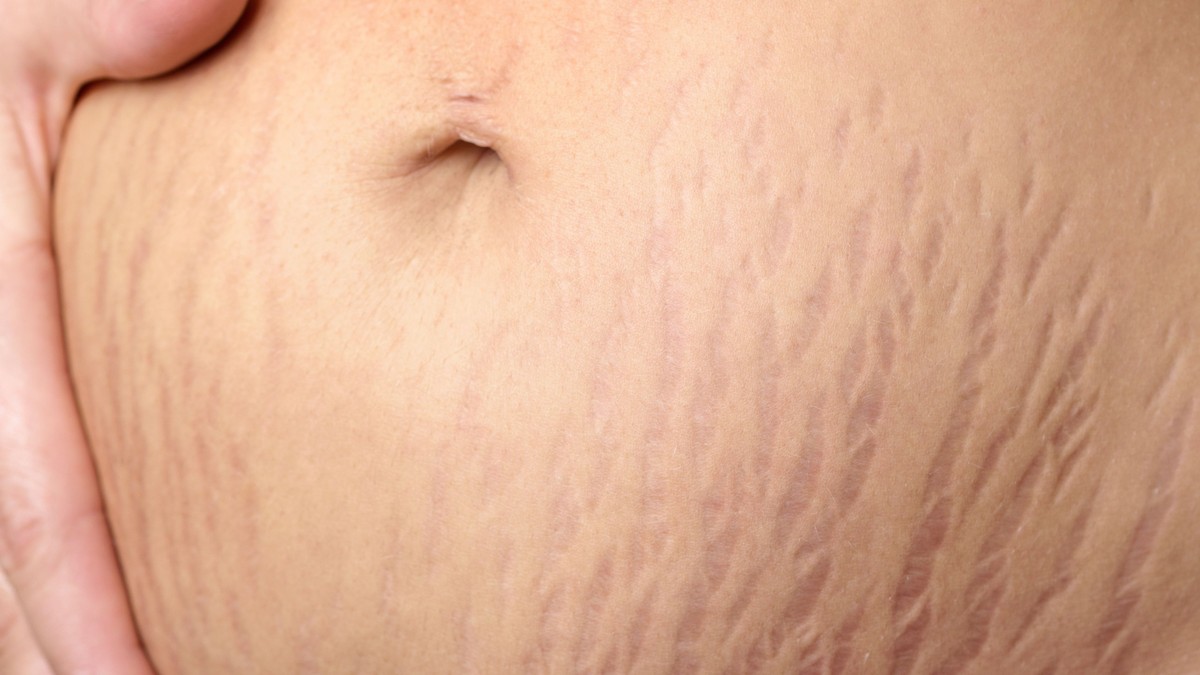
Perhaps the most infamous of dreaded skin symptoms, stretch marks often occur during, and particularly after, your pregnancy. In fact, close to 90 percent of women will experience stretch marks from pregnancy. Stretch marks will appear as a pink or red streak running down an area of skin that stretches, such as the stomach, thighs or breasts.
What You Can Do to Prevent Stretch Marks
Here are six tips to help prevent stretch marks:
- Lather up. Use lotions rich with vitamin E and alpha hydroxyl acid.
- Hydrate well. Drink the recommended eight to12 glasses of water per day.
- Opt for oils. Apply coconut oil directly to your entire body after a bath or shower.
- Befriend Shea and cocoa butter. They also help the skin remain moist and hydrated.
- Eat foods rich in zinc. Zinc is present in chicken, lamb, eggs, beef, legumes, most nuts and whole grains.
- Consume skin-friendly foods. Also consume a collagen-rich diet, including gelatin, broths, vitamins A, C, and E.
- Get healthy omegas. Always keep your omega balance at a ratio of 3:6. If you are unsure how to do this, ask your doctor for some advice. Prenatal vitamins may include them, as well.
When all else fails, remember that stretch marks do fade with time. After delivery, your stretch marks will fade to silver lines. You can also use these prevention pointers to treat your existing stretch marks.
During pregnancy, your skin’s pigmentation tends to increase as a result of hormone fluctuations. This increase in pigmentation causes dark splotches that usually appear on the face. This increase causes melasma and chlosma, which many call the “Mask of Pregnancy.”
Nearly 50 percent of women experience this alarming skin change, but this next common pregnancy skin may come as a surprise.
Top Tips for Dealing with the Mask of Pregnancy
Here are four tips for reducing the mask of pregnancy:
- Limit sun exposure by wearing a sun protection factor (SPF) of at least 15. The most effective, safe options for pregnant women are mineral blocks made with titanium dioxide or zinc. Also, physical blocks are always ideal, such as a hat, beach umbrella and sunglasses.
- Consume foods rich in folic acid.
- Moisturize with lotions that are safe for pregnant women.
- Remember that it will fade. Generally, the mask disappears a few months after delivery. Until then, you can always cover it up with concealer.
3. Understanding the Pregnancy Glow That No One Minds
Many women look forward to the infamous glow with pregnancy. The glow occurs due to moisture retention during pregnancy. This retention plumps up the skin and rids of any fine lines or wrinkles.
Pregnancy causes blood production to increase by 50 percent, which in turn increases blood circulation. An increase in circulation causes skin to appear brighter and more youthful.
Hormone production also shifts into over drive during pregnancy. Much of this hormone production causes the shiny appearance to skin, but it can also leave you feeling warm and possibly flushed at times.
There is a down side to this wonderful glow, though. The puffiness can sometimes be a bit too much and cause you to feel bloated. Also, any pre-existing redness on your skin will now become more visible. However, all of these symptoms will subside within a few months of giving birth.
Things You Should Know About the Glow
Here are a few tips for your glowing skin:
- Cleanse your skin with an oil-free cleanser.
- Hydrate well. It sounds counter-productive, but hydration can actually help fight water retention.
4. Throwback Time: Rewinding Your Skin to the Dreaded Teenage Years
Pregnancy might provide you with a time lapse back to your pimple-ridden teenage days. Unfortunately for many women, acne and oily spots can resurface during pregnancy, even if you haven’t had any since your teenage years.
Higher hormone levels produce more sebum, which is the oil that maintains supple skin. An over-production of sebum causes block pores and greasy skin. Women who already suffer from skin conditions can experience worsened skin during pregnancy.
Acne rosacea tends to worsen during pregnancy. In addition to the spotting, rosacea can also cause incessant redness across the cheeks, nose, and chin, along with facial flushing. Triggers for rosacea include spicy foods, sunlight and changes in the weather.
Tips to Help You Combat Acne and Rosacea
Inarguably acne and rosacea are tough to fight. Here are seven tips for dealing with pregnancy acne and rosacea:
- Adopt a regular cleansing routine. Cleanse daily with a non-irritating soap every morning and night.
- Apply an astringent to remove any unwanted oils. Be sure to read all labels to ensure that the product is safe for pregnant women.
- Moisturize after applying the astringent. Your skin can dry out quickly by cleansing and applying heavy oil-removers.
- Keep make up to a minimum. Always remove makeup before bed.
- Mention your pregnancy to your dermatologist. There are many products that expectant mothers should avoid during pregnancy.
- Read labels carefully. Find unscented, non-comedogenic products. Oil free products will help prevent clogged pores, but this will only be helpful for oily skin. Women with dry skin should find moisturizing products.
- Always consult with your doctor first. If your skin symptoms are unbearable, speak with your doctor about pregnancy-safe medications. There are many creams and medications that are not safe for pregnant women.
5. Preparing Yourself: You May Become Overly Sensitive in More Ways Than One
Sure, you might notice that you are emotionally more sensitive, but your skin will become more sensitive, too. Be mindful of excessive scrubbing. Also, any scented products will likely irritate your skin, and potentially your body, especially if you are easily nauseated.
Pointers for Pampering Your Sensitive Pregnancy Skin
Here are three ways you can deal with sensitive skin:
- Opt for unscented products. Look for natural washes and lotions without chemicals or harsh additives. If you are not sure what to use, ask your obstetrician.
- Avoid scrubs and exfoliants. If you still want to exfoliate, find a natural loofah or washcloth.
- Also avoid parabens, fragrances and triclosan. These ingredients will not only prove irritating, but they can also potentially pose health risks to your unborn baby.
6. Prevent Those Troublesome and Stubborn Varicose Veins
During and after pregnancy, varicose veins may appear on your legs. Varicose veins are chunky, blue veins that appear in areas that lack circulation. During pregnancy, your body must compensate for the additional blood flow, hence the varicose veins.
These veins can be more than just unflattering. Many claim that varicose veins are painful. Women with a family history of varicose veins should especially make prevention attempts during pregnancy.
How You Can Be Victorious in the War Against Varicose Veins
Photo by James Heilman, MD / CC BY-SA
Here are effective varicose vein prevention measures for women who are expecting:
- Avoid standing or sitting for too long.
- Exercise to your best capabilities. This could include walking or weight lifting.
- Always listen to your body and speak with your doctor before exercising.
- Prop your feet up when sitting.
- Wear support stockings.
- Consume vitamin C to promote vein health and elasticity.
- Follow a healthy diet to avoid excessive weight gain.
The next pregnancy skin issue is problematic to most pregnant ladies, but it usually resolves on its own.
7. Tincture of Time: What You Need to Know About Those Tiny Spider Veins
In addition to varicose veins, spider veins also commonly occur during pregnancy. Also referred to as spider nevi, these veins appear as small red blood vessels that extend outward. These veins are harmless and extremely common, especially if you are already prone to them.
The increase in blood circulation synonymous with pregnancy adds pressure to the body’s capillaries. This paired with higher estrogen levels increases the likelihood of spider veins.
Spider veins commonly appear on the neck, arms, face and upper chest. These veins, unlike varicose veins, do not hurt. Spider veins tend to disappear after delivery, and they are more common in Caucasian women.
Photo by Herbert L. Fred, MD and Hendrik A. van Dijk / CC BY
Spider Vein Prevention: Tips You Can Use Right Now
Here are some ways to combat spider veins:
- The veins will fade within a few months of giving birth, once your hormone levels have settled down.
- In the meantime, try to protect your face and limbs from extremes of cold or heat as this can make them worse.
- Consume lots of vitamin C.
- Avoid crossing your legs.
- Prevention might be difficult, especially if you are prone to spider veins due to heredity.
- If your spider veins don’t disappear on their own after a few months following delivery, talk to your doctor about safe treatment methods, such as laser therapy.
8. Itchy and Dry Skin: Reasons You Need to Watch Out for Serious Symptoms
With your belly extending, your skin will have to compensate. Stretching and tightening skin will become dry and itchy. If at any time this itching appears alongside nausea, vomiting, loss in appetite, jaundice or fatigue, then contact your doctor immediately.
It is common for rashes and itchiness to appear with pregnancy. However, it is vital that you decipher between general and severe itchiness.
- General Itchiness: Defined as becoming more sensitive to substances, such as chlorine in a pool, more than likely, this general itchiness is harmless. This break out generally appears in the form of a rash. General itchiness is commonly observed as a skin irritation to moisturizers or typical fragrances or substances that never used to irritate the skin.
If what appears a general itchiness causing pain or discomfort, then be sure to bring it up to your doctor or midwife.
- Severe itchiness: The moment your itchiness becomes uncomfortable or even painful, then see your midwife or doctor.
- Obstetric cholestasis (OC): While severe itchiness is uncommon, it does occur. Conditions such as obstetric cholestasis (OC) often cause severe itching. This itching is intense on sensitive areas such as the palms and soles of the feet.
More complicated issues cause many of these conditions that cause severe itching. For example, obstetric cholestasis is related to liver dysfunction. Approximately, one in 50 pregnancies experience OC.
- Pruritic Urticarial Papules and Plaques (PUPP): If severe itching is spreading to your limbs, then it could be due pruritic urticarial papules and plaque. One in every 150 pregnancies experience PUPP.
It causes incredibly itchy, red raised patches all over the body. Your doctor will require a blood test to verify the condition. Therefore, it is imperative you see medical attention if you are experiencing any form of severe itching.
Four Ways to Soothe Your Pregnant Skin
One out of every five pregnant women will experience some form of itchy skin. Here are four ways that you can help to alleviate the itching safely:
- Moisturize with a safe product to prevent itching. Always check product labels.
- Apply anti-itch creams, such as calamine lotion, to already-itchy areas.
- Seek medical attention. Often times, doctors can prescribe medications to treat severe itching.
- Soak in an oatmeal bath to relieve any discomfort. However, be mindful of a few facts in regards to baths. Too many baths strip the skin of its moisture and in turn cause itchiness. Also, keep baths or showers short.
- Do not use too hot of water, and stick to mild soaps.
9. Linea Nigra: Understanding the Line That Might Not Be So Fine
One uncommonly discussed pregnancy-related skin issue is a line called the linea nigra. This dark line moves from the middle of your belly button towards the pelvis. This line can measure up to one centimeter wide and can sometimes cross the belly button. The linea nigra tends to appear during the second trimester, but not everyone gets one.
Some assume that the natural stretching that occurs with pregnancy causes this line. However, the linea nigra occurs because of hormone changes causing a transformation to the skin’s pigmentation.
Believe it or not, your linea nigra may have always been there. Pregnancy causes this line to darken due to hormonal fluctuation. Therefore, it should go back to its lighter tone a few months after delivery.
Is There Any Prevention For Linea Nigra?
- Simply put, no. There is nothing you can do to prevent the linea nigra from appearing. However, the line will dissipate within a few weeks after birth.
- In the meantime, you can wear clothing that covers your belly.
- Also, you can apply concealers to hide your line.
10. All About Other Areas That Will Darken and Things You Can Do
Photo by Madhero88 / CC BY-SA
Due to hormones fluctuating, your skin will darken in various areas. In fact, this is how many women know that they are pregnant. One of the first signs of pregnancy is markedly darker skin in specific areas. These areas include the belly button, nipples, the armpits, inner thighs, and even various moles or freckles.
Even though you can’t help hormonal shifts, there are a few things you can do to either prevent or lessen this darkening:
Suggestions for Dealing with Your Skin Darkening
- Limit your sun exposure to prevent dark patches, as the sun will make them more noticeable. Wear at least SPF 15 and a hat whenever you are out.
- Contact your dermatologist immediately if you notice a mole or freckle changing in shape, texture, or color. While darkening is normal, mole or freckles should not change in size or texture.
- Remember that these patches should fade within a few months of giving birth.
- Conceal any dark spots with foundation or concealer.
- Seek medical help if your dark patches persist after giving birth. Often times, a dermatologist can prescribe creams, gels, or lotions.
11. How to Handle Hyperactive Growth and Your New Skin Tags
Skin tags commonly appear with pregnancy. These growths are small, soft growths that will usually match the color of your skin. Skin tags tend to grow on areas of the skin that are hot, moist, or frequently rubbed. These areas include the folds of the neck, armpits, torso, and beneath the breasts or genitals. While these growths might not look nice, they are almost always benign.
These skin tags occur because of the skin’s outer layer of hyperactive growth. However, pregnancy usually sparks this hyperactive growth. While there are no preventative measures for skin tags, there are a few facts that might ease your mind:
Photo by Jmarchn / CC BY-SA
Understanding Your Skin Tag Treatment Options
- Skin tags should disappear after pregnancy.
- If your skin tags do not disappear, then a dermatologist can always remove them. Removal options include freezing or cauterizing the area.
- Although there are many so-called home treatments on the Internet, never attempt skin tag removal on your own.
12. Another Pregnancy Symptoms: Addressing Your Suddenly Sensitive Skin
During pregnancy, your skin will become increasingly sensitive, regardless of what your pre-pregnancy skin was like. Soaps that once gave you no trouble at all can now cause you to break out in a skin rash, but realize that this is quite common with pregnancy.
Also, skin conditions pre-existing your pregnancy might improve or worsen. Sometimes women note that issues such as psoriasis or rosacea improve during the first trimester but then worsen dramatically later in the pregnancy. The immune system increases production of cells that can either help or hinder an already existing skin condition.
Ways You Can Soothe Your Sensitive Skin
- Avoid sun-exposure, and wear at least SPF 15 whenever you are out.
- Moisturize your skin and wear loose-fitting clothing to prevent moist breeding grounds for issues.
- Speak with your doctor about any topical creams or treatments you might want to try.
The next one is another symptom of pregnancy many women are not prepared for.
13. Handling Hives: Reasons Your Belly Isn’t the Only Bump You May Encounter
Photo by James Heilman, MD / CC BY-SA
Many pregnant women experience hives, or nettle rash. Hives appear as raised, swollen bumps that itch incredibly. These hives appear as a result of an allergic reaction. This reaction could be due to food, an insect bite, medicine and much more. During pregnancy, your body can become much more sensitive, so hives can occur.
Hives come and go within a few hours up to a few days. The body produces histamine, and this in turn acts as a trigger for hives. Histamine production can increase due to temperature changes, infection, or an allergy.
Strategies to Help You Handle Your Hives
Hives can be rather cumbersome, so here are a few ways to handle them:
- Avoid tightly fitting clothing, hot showers, and stress.
- Practice relaxation methods such as yoga or meditation.
- Do your best to not scratch your hives. Scratching can further trigger more hives. While they are not contagious, they can spread with itching.
- Seek medical attention when your hives become too horrible to bear. Your doctor can prescribe safe alternatives to alleviate your itching.
14. Skin Color Changes: What About Your Reddish Blue Palms and Soles?
Palmar erythema is common during pregnancy. This condition occurs as a result of increased estrogen production and increased blood volume. Women experience this condition as early as the second month of pregnancy. Palmar erythema causes the palms and soles of the feet to appear a reddish blue color and itch.
Preventing Palmar Erythema
There are a few things that you can do to help prevent palmar erythema:
- Avoid possible irritants, such as fragranced soaps or lotions.
- Soak your hands or feet, or possibly both, in cold water a few times per day. This cooling cannot hurt. It works to prevent scratching and alleviate the itching sensation
- Distract yourself. Go for a walk, watch a movie, or have a snack.
- Consult your dermatologist if the itching becomes uncomfortable or unbearable.
15. Important Reasons Your Baby Won’t be the Only One with Heat Rash
Babies aren’t the only ones who can experience heat rash. In fact, this is one of the skin changes that many pregnant women experience. Heat rash occurs when there is a combination of warmth and dampness. Pregnant women already have elevated body temperatures, so any built up perspiration can likely create heat rash.
Heat rash occurs most commonly between or beneath the breasts and within the crease of the lower abdomen and the upper pubic area. Also, you can see it between the inner thighs as well.
How to Prevent or Lessen Your Uncomfortable Heat Rash
You can prevent heat rash with these simple tips:
- Stay cool. Keep the AC on, wear cool clothing, or have a fan nearby.
- Avoid tight-fitting clothing.
- Wear layers so that you can always take off a layer if you are too warm.
Most women want the desirable pregnancy glow. Unfortunately, there are some other undesirable effects to a woman’s skin during pregnancy, as well. Regardless of your skin’s condition, remember these tips and tricks to soothe all of your surprising skin issues, while keeping calm and enjoying your pregnancy. It is a special time in your life that will zoom by faster than you may expect, so take care of yourself and enjoy.
Comments are closed.
Search Our Site
Top 5 Popular Posts
- Your Quick Guide On How To Effectively Remove Stretchmarks
- Stretch Mark Cream Uses – Ways To Use Stretch Mark Cream To Take Good Care Of Your Skin
- Choosing A Stretch Mark Cream – Top Products To Use
- Pregnancy and Your Skin: 12 Effective Epidermis Tips for Expectant Moms
- Stretch Mark Cream In Singapore: Quality And Perfection
Recent Posts
- Pregnancy and Your Skin: 12 Effective Epidermis Tips for Expectant Moms
- Prevention and Remedies: The 8 Common Risk Factors for Stretch Marks
- 15 Skin Changes to Expect When You’re Expecting a Baby
Please follow & like us 🙂